When embarking on your journey toward a Private Pilot Certificate or an airline career, the aircraft you choose to learn in plays a defining role in your development as an aviator. For decades, flight training across America was dominated by legacy, high-wing metal trainers designed in the 1950s and 1960s. While those traditional aircraft introduced generations to the skies, modern flight training demands higher aerodynamic performance, digital glass-cockpit integration, superior fuel efficiency, and uncompromising structural strength.
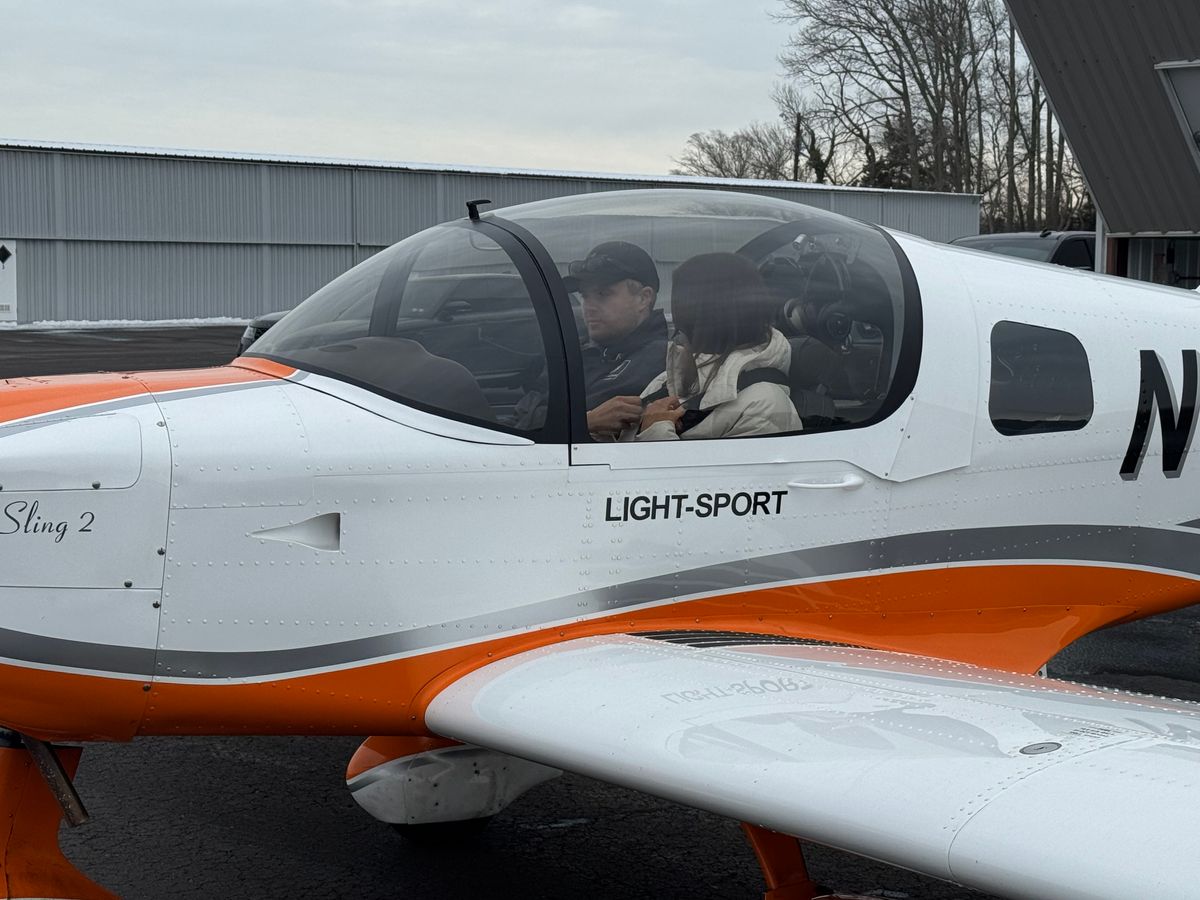
At 609 Aviation Flight Training, based at Cape May County Airport (KWWD) in Rio Grande, New Jersey, we train our students in the Sling 2 (Sling LSA / Sling NGT)—a state-of-the-art, low-wing aircraft engineered specifically to produce safer, more precise, and more confident pilots.
With new regulatory expansions under the FAA's MOSAIC framework and the introduction of the Sling 2M, the Sling 2 platform is revolutionizing pilot education. Here is a deep dive into the engineering, expeditionary heritage, avionics, and operational advantages that make the Sling 2 the premier training platform at 609 Aviation.
1. Expeditionary Heritage & World-Record Engineering
Unlike light aircraft designed solely for local airport circuits, the Sling 2 was born out of extreme real-world expeditionary testing. Designed in Johannesburg, South Africa, by aviator Mike Blyth and adventurer James Pitman at The Airplane Factory (now Sling Aircraft), the Sling 2 was engineered to endure the harshest environments on Earth.
Around-The-World Circumnavigation (2009): To prove the structural integrity of the production prototype (ZU-TAF), Blyth and Pitman flew the Sling 2 on a 40-day, 45,000 km (24,000 nautical mile) westerly circumnavigation of the globe. The journey included non-stop legs across the Atlantic Ocean lasting up to 22 hours in severe weather conditions—making it the first aircraft in its class to complete an official global circumnavigation.
Overwater Heavy-Weight Performance: During long overwater legs, the aircraft was operated at gross weights up to 2,127 lbs (over 800 lbs above its standard light-sport limit), demonstrating extraordinary structural margins and lift efficiency.
Tested to the Outer Limits: The airframe underwent rigorous static load testing to destruction up to 1,540 lbs (CS-VLA standard) and progressive spin testing programs, ensuring maximum safety for student pilots and flight instructors.
2. Advanced Airframe Architecture & Handling Dynamics
Flight training should teach true stick-and-rudder mastery, not heavy muscle control. The Sling 2 combines fighter-like handling responsiveness with extremely forgiving low-speed stability.
Match-Hole Aluminum Construction
The airframe is built from high-strength 6061-T6 tempered aluminum sheet, manufactured using high-precision CNC match-hole tooling. Primary wing spar assemblies are anodized, and all internal structural aluminum surfaces are alodined and primed prior to assembly for maximum corrosion resistance in coastal environments like Cape May.
Precision Control Systems
Rigid Pushrod Flight Controls: Unlike legacy aircraft that rely on flexible cables and pulleys, the Sling 2 uses rigid steel pushrods with ball bearings for aileron and elevator actuation. This eliminates cable stretch, lag, and slop, providing instantaneous, crisp control feedback.
Rugged Landing Gear: The main gear legs are constructed from uni- and biaxial fiberglass with aircraft-grade epoxy to absorb high-sink-rate student landings, paired with a 4130 chromoly steel engine mount and a steerable nosewheel with a steel coil spring damper.
360-Degree Panoramic Visibility: Featuring a forward-sliding bubble canopy with a protective rollover structure, the Sling 2 offers fighter-pilot visibility. Scanning for traffic, maintaining spatial awareness, and setting up visual airport patterns are vastly superior compared to high-wing legacy designs.
Ballistic Parachute Integration: The airframe supports an optional Magnum 601 / BRS whole-aircraft ballistic parachute recovery system, providing an unmatched extra layer of safety.
3. The MOSAIC Revolution & The Sling 2M IFR Trainer
The modern flight training landscape is undergoing a massive transformation with the FAA's MOSAIC (Modernization of Special Light-Sport Aircraft) rules and ASTM F37 standards. 609 Aviation is at the forefront of this shift with the Sling 2M (Next Generation Trainer).
Increased Gross Weight (1,540 lbs): Under MOSAIC, maximum gross weight increases from 1,320 lbs to 1,540 lbs, elevating useful load to over 600 lbs. This expansion allows two full-sized adult pilots, a full fuel load, and a whole-airframe parachute to fly simultaneously without payload compromises.
Full IFR & IMC Capability: Equipped with advanced digital flight management systems, the Sling 2M is fully authorized for Instrument Flight Rules (IFR) operations in actual Instrument Meteorological Conditions (IMC). Students can complete their Private Pilot Certificate, Instrument Rating, and Commercial Pilot License in a single, familiar aircraft type.
Single-Daily Refueling Efficiency: With 39.6 US gallons (150 liters) of dual wet-wing fuel capacity, the Sling 2 offers up to 8 to 10+ hours of endurance and an 800+ nautical mile range. Flight schools can refuel once daily, maximizing flight dispatch reliability and keeping students in the air.
4. Modern Glass Cockpit & Digital Avionics
Today's regional and mainline airliners operate in fully integrated digital glass-cockpit environments. Learning on analog "steam gauges" creates unnecessary friction when transitioning to advanced ratings. The Sling 2 at 609 Aviation features an industry-leading avionics suite:
Garmin G3X Touch Primary Display: A 10-inch high-resolution touchscreen EFIS integrating Primary Flight Display (PFD), Multi-Function Display (MFD), moving maps, synthetic vision, and real-time digital engine monitoring (EGT, CHT, oil pressure, fuel flow, manifold pressure).
Garmin G5 Backup EFIS: An independent secondary attitude indicator and flight instrument with a dedicated backup battery.
Garmin GTX 45R Transponder: IFR-compliant ADS-B In/Out transponder delivering real-time cockpit traffic and subscription-free weather alerts directly onto the primary screen.
Dual-Axis Autopilot & Audio Panel: Integrated Garmin GMC 507 autopilot controller and Garmin GTR 205 VHF communications radio for complete modern procedural training.
5. Powerplant Efficiency & Unbeatable Operating Economics
A primary concern for student pilots is managing training expenses. Traditional legacy trainers burn 8 to 12 gallons per hour of expensive 100LL Aviation Gasoline (AvGas).
The Sling 2 is powered by the ultra-reliable Rotax 912 iS engine—a four-cylinder, four-stroke engine featuring dual electronic fuel injection and dual-redundant Engine Management Systems (EMS).
3.7 to 3.8 GPH Fuel Burn: Burning under 4 gallons per hour of Mogas or AvGas, the Sling 2 reduces direct fuel consumption by more than 50% compared to legacy trainers.
$50–$56/hr Direct Operating Cost: Lower operating costs translate directly into competitive hourly rental rates, making full flight certification far more affordable.
High Reliability: Modern liquid-cooled cylinder heads and electronic ignition reduce mechanical downtime, ensuring your training progression remains uninterrupted.
6. The 609 Aviation Advantage at Cape May Airport (KWWD)
Pairing a world-class training aircraft with a premier flight training environment creates the ultimate pathway to success. When you train in the Sling 2 at 609 Aviation, you benefit from structural training advantages that few schools can match:
Uncongested Coastal Airspace: Located at Cape May County Airport (KWWD) in Rio Grande, NJ, our students experience zero taxiway gridlock and immediate departures—maximizing actual air time for every dollar spent.
Diverse Airspace & Multiple Runways: KWWD features multiple active runways, full-service fuel, a pilot lounge, and easy access to both uncontrolled coastal airspace and busy towered regional hubs.
No Delayed Checkrides: Led by CEO Katie Washart and COO Richard Washart—a veteran Legacy Airline Captain and active FAA Designated Pilot Examiner (DPE)—our students train directly under examiner-level standards and experience seamless checkride scheduling without months of waiting.
Personalized Ground & Flight Curriculum: We pair our fleet with a curated flight syllabus, the Gold Seal online ground school, and a team of CFIs (including Kenneth Super, Adriano Dominguetti, and Frank Basile) who bring the "heart of a teacher" to every lesson.
Step Into the Cockpit of the Future
Whether you are earning your Private Pilot Certificate, taking advantage of our accelerated finish-up program, or building time toward the 1,500-hour ATP requirement for an airline career, training in the Sling 2 gives you a decisive modern advantage.
Schedule your Discovery Flight with 609 Aviation today and experience the Sling 2 firsthand!
Phone: (609) 283-5192 / (609) 992-4521
Location: Cape May County Airport (KWWD) | 175 Forrestal Rd, Rio Grande, NJ 08242
Website: 609aviation.com