
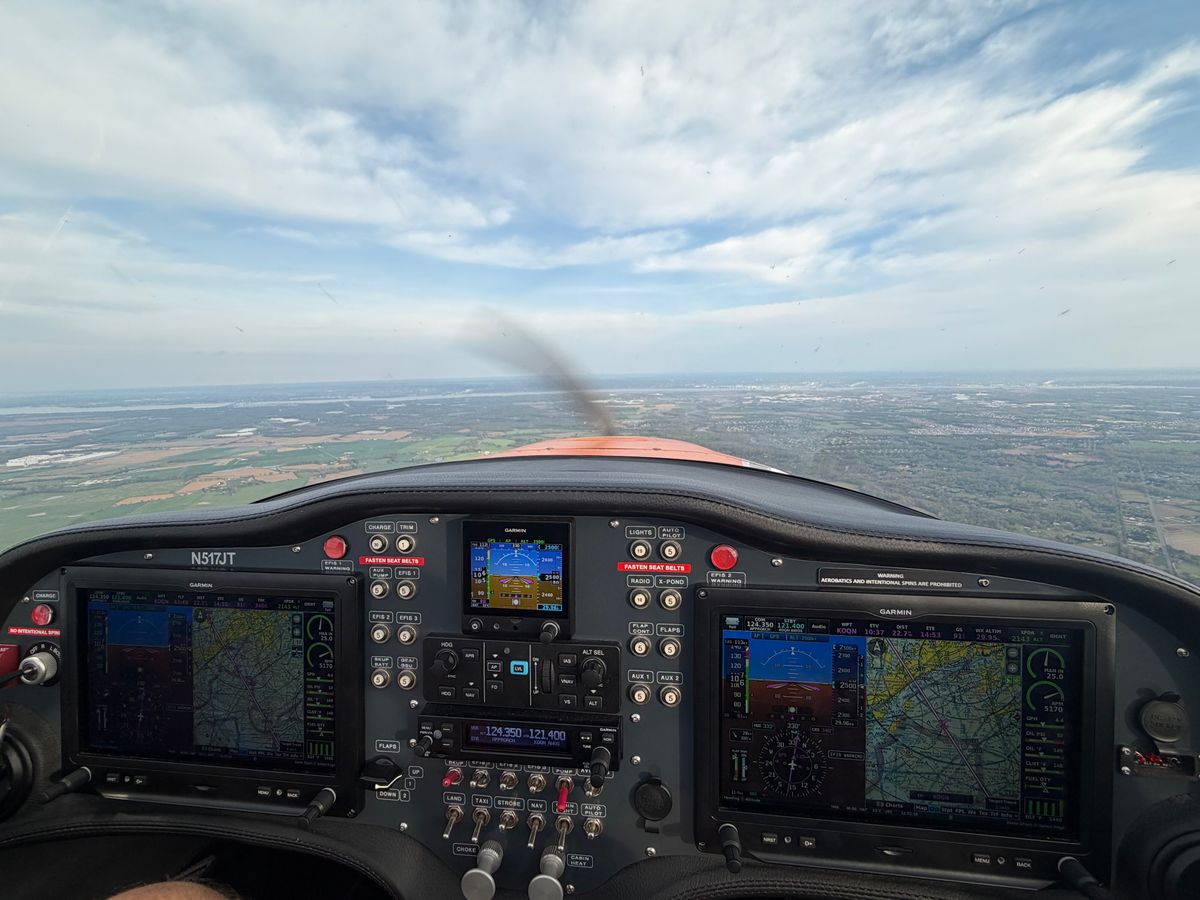
As a Designated Pilot Examiner (DPE) for the FAA, I have sat in the right seat for hundreds of checkrides. I’ve seen applicants step into the room radiating absolute confidence, and I’ve seen others who are practically shaking with anxiety.
Here is a secret from the other side of the testing table: a significant portion of checkride failures have absolutely nothing to do with how you fly a steep turn. They happen before the engine even starts.
If you want to walk into your practical test with the mindset of a successful Pilot in Command (PIC), you need to master the ground game just as much as your flight maneuvers. Here is my insider guide on how to pass your checkride before you ever leave the ground.
1. Win the Paperwork Battle First
Legally, a DPE cannot evaluate your skills if your paperwork is deficient. Your checkride begins the exact moment we sit down together. If we spend the first two hours untangling an unorganized logbook or hunting down missing signatures, your stress levels will skyrocket before we even walk out to the ramp.
To ensure your pre-approval paperwork is flawless, treat it like your first critical flight checklist:
The IACRA Clean-Up: Ensure your application is completely filled out and that your instructor has signed off on their end. Double-check that your name matches exactly across your driver's license, medical certificate, and IACRA application.
Logbook Transparency: Don't make your examiner dig through hundreds of pages. Use sticky tabs to clearly mark your cross-country flights, night flying, instrument time, and especially your 3 hours of checkride prep within the preceding 2 calendar months.
The Endorsement Audit: Verify you have every single endorsement required by 14 CFR Part 61 for the certificate or rating you are seeking. Missing a single signature can ground your checkride before it officially begins; which just puts a damper on your big day.
Aircraft Airworthiness: You must prove the aircraft is legal for the test. Be ready to show me the A.R.O.W. documents and use tabs in the maintenance logs to instantly point out the annual, 100-hour (if applicable), transponder, pitot-static, and ELT inspections.
DPE Tip: When an applicant presents a neat, organized binder with tabs for their logs, endorsements, and maintenance records, it instantly signals to me that they possess the organizational discipline of a safe, professional pilot.
2. Conquer the Oral: It’s a Conversation, Not an Interrogation
Many applicants dread the oral portion the most, picturing a grueling cross-examination on obscure federal regulations. In reality, the oral exam is a structured discussion designed to evaluate your practical application of knowledge, not just your ability to memorize facts.
Expect Scenarios, Not Flashcards: I rarely ask flat trivia questions like, "What is V_g?" Instead, I’ll ask, "You just lost your engine over a forest at 4,000 feet. Walk me through your exact pitch attitude, glide strategy, and cockpit configuration." Study by putting your knowledge into real-world contexts.
Know Your Aircraft Inside and Out: You need to be the expert on the specific tail number you brought to the exam. Know its fuel capacity, its electrical system layout, how the landing gear operates, and the specific emergency procedures outlined in Section 3 of the POH.
Use Your Resources (The "Look-It-Up" Rule): I do not expect you to be a walking encyclopedia. If I ask an obscure question about airspace dimensions or equipment requirements, it is entirely acceptable to say, "I want to double-check that to be absolutely certain. Let me open the FAR/AIM or the sectional chart." * Don't Dig Your Own Hole: Answer the question I asked, cleanly and accurately, and then stop talking. When nervous applicants ramble, they often start talking about topics they aren't fully clear on, which forces me to dig deeper into those weak areas.
3. Stop Guessing, Start Reading: The ACS is Your Blueprint
I occasionally see applicants who treat the flight portion like a pop quiz where the examiner is trying to trick them. It isn't. The FAA literally publishes the exact grading rubric for your test: the Airman Certification Standards (ACS).
Every single task I will ask you to perform, and the exact tolerances you must maintain, are laid out right there in black and white.
Fly the Standards, Not Perfection: The ACS defines the parameters (e.g.,+/- 100 feet, +/- 10 knots). If you drift 50 feet off your altitude during a maneuver, don’t panic—you are still within standards. Acknowledge the deviation, correct it smoothly, and keep flying the airplane. Even if you exceed the tolerance it does not mean the exam is over. The ACS allows for momentary deviations from the standard as long as there is prompt correction.
Understand Risk Management: The ACS heavily emphasizes Risk Management and Situational Awareness. I don't just want to see you recover from a stall; I want to hear how you plan to avoid entering an inadvertent stall while flying a tight base-to-final turn.
Talk it Out: I highly encourage applicants to talk through their maneuvers. If you are correcting for a crosswind or adjusting your power setting, tell me what you're doing. It proves to me that you are proactively managing the aircraft, not just reacting to it.
4. Embody the PIC Mindset
From the FAA's perspective, my primary goal as an examiner is to ensure you will be a safe, competent addition to the National Airspace System. I am looking to see if you can make sound decisions when no one else is in the cockpit.
On the day of your checkride, you are the Pilot in Command. If the weather looks marginal during your oral cross-country planning, or if the aircraft has an unresolved maintenance squawk that makes you uncomfortable, you have the right—and the responsibility—to call a discontinuance. Agreeing to fly in unsafe conditions just to "please the examiner" is an immediate red flag.
Preparation Equals Peace of Mind
A checkride shouldn't be a game of "gotcha." It’s simply a verification of the hard work, hours, and discipline you’ve already put in with your flight instructor. Clean up your paperwork, study your scenarios, fly to the ACS tolerances during your mock checkrides, and come ready to show me why you deserve that new plastic card in your wallet.
Safe flying, and I'll see you at the testing table.