Earning a Private Pilot Certificate (PPL) is a life-changing milestone, but traditional general aviation flight training suffers from a staggering industry-wide statistic: 70% to 80% of student pilots drop out before ever reaching their checkride.
Research from the Aircraft Owners and Pilots Association (AOPA), the Society of Aviation and Flight Educators (SAFE), and the National Association of Flight Instructors (NAFI) confirms that the majority of student pilots do not quit because flying is too difficult. Instead, they quit due to a loss of training momentum, "skill rot" caused by infrequent scheduling, unexpected financial inflation, and severe Designated Pilot Examiner (DPE) booking delays at the finish line.
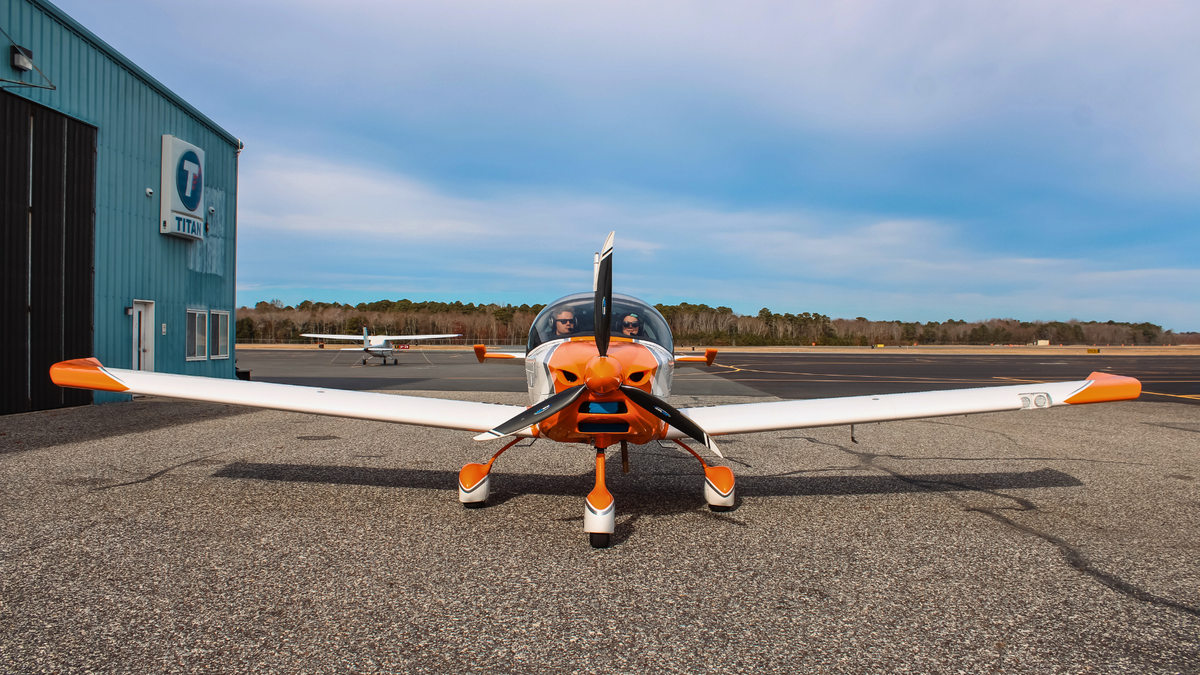
At 609 Aviation Flight Training, operating out of Cape May County Airport (KWWD) in New Jersey, we have engineered an accelerated 30-day Private Pilot Certificate program designed specifically to beat the 80% dropout statistic. By combining full-time immersive scheduling, modern glass-cockpit training aircraft, and an in-house FAA Designated Pilot Examiner, our students achieve true stick-and-rudder mastery, complete their rating in 40 to 50 flight hours, and earn their wings in four structured weeks.
The Science of Accelerated Training vs. The 80% Dropout Trap
Understanding why traditional flight training fails clarifies why accelerated training succeeds:
1. Eliminating "Skill Rot" & The 15-Hour Cliff
In a traditional flight school model, students fly once or twice per week. This sporadic cadence introduces long gaps between lessons, leading to cognitive and motor skill decay ("skill rot"). In fact, up to 20% of every subsequent lesson in traditional training is spent re-learning maneuvers from the week before.
This friction creates the infamous "15-Hour Cliff" (between hours 10 and 20), where students plateau during landing practice, experience financial fatigue, and lose momentum. In contrast, flying daily at 609 Aviation keeps muscle memory and situational awareness fresh. Yesterday's lesson directly informs today's flight, allowing students to solo safely within two weeks and complete their certificate in 40 to 50 total flight hours, compared to the national average of 72 to 78 hours.
2. Honest Financial Architecture
According to national flight training data, the median all-in cost for a Private Pilot Certificate across traditional U.S. flight schools sits at $18,083 over a typical 72-hour completion pace (calculated at $165/hr trainer rental and $66/hr instruction). However, when traditional flight training stretches across 8 to 12 months, unexpected price increases and extra remedial hours often push total expenditures past $22,000.
Because accelerated training reduces total flight hours required by eliminating repetitive review, students save thousands of dollars in total aircraft rental and instructor fees.
3. Uncongested Cape May Airspace (Zero "Taxi-Time" Waste)
At major metropolitan airports or congested suburban flight hubs, student pilots routinely spend 0.3 to 0.5 hours per flight sitting on the taxiway waiting for Air Traffic Control clearances—costing up to $150 per lesson in burnt fuel and wasted instructor time. Operating out of Cape May County Airport (KWWD) offers Class G/E uncongested coastal airspace, multiple active runways, and immediate access to practice areas. Every dollar you spend goes directly toward active flight instruction.
4. Zero Checkride Scheduling Delays
Perhaps the single largest bottleneck in modern flight instruction is waiting 2 to 3 months for a Designated Pilot Examiner (DPE) booking after being endorsed for a checkride. During this waiting period, students must pay for continuous "maintenance flights" to stay proficient. With 609 Aviation COO, Legacy Airline Captain, and active FAA DPE Richard Washart leading our program, checkrides are scheduled seamlessly upon course completion—eliminating post-training stalls completely.
Pre-Arrival Requirements: The Key to 30-Day Success
Accelerated flight training requires total focus. To ensure you finish smoothly in 30 days without academic friction, candidates complete three administrative milestones prior to Day 1:
FAA Medical Certificate: Obtain at least a 3rd Class FAA Medical Certificate from a local Aviation Medical Examiner (AME).
Gold Seal Ground School & FAA Written Exam: Complete the interactive Gold Seal online ground school course and pass your FAA Private Pilot Knowledge Test (PAR) before arriving at KWWD. Clearing the written exam ahead of time frees 100% of your daily mental capacity for cockpit application and oral exam mastery.
FAA IACRA Registration: Set up your FAA Integrated Airman Certification and Rating Application (IACRA) profile and obtain your FAA Tracking Number (FTN).
The 30-Day Accelerated Private Pilot Schedule
Below is the day-by-day training blueprint utilized at 609 Aviation.
Week 1: Foundational Stick-and-Rudder Mastery & Slow Flight (Days 1–7)
Focus: Master the Four Fundamentals, glass-cockpit orientation in the Sling 2, and stall recoveries.
Day 1: Orientation & Preflight Operations
Ground (2.0 hrs): Sling 2 aircraft systems, Rotax 912iS fuel-injected engine management, preflight inspection, and Garmin G3X EFIS setup.
Flight 1 (1.5 hrs): Discovery Flight & The Four Fundamentals (Straight-and-level, climbs, descents, and turns).
Day 2: Slow Flight & Stall Dynamics
Ground (1.5 hrs): Aerodynamics, angle of attack, stall recognition, and recovery physics.
Flight 2 (1.5 hrs): Maneuvers area—Slow flight, power-off (approach) stalls, power-on (takeoff) stalls, and steep turns (45° bank).
Day 3: Emergency Operations & Ground Reference Maneuvers
Ground (1.5 hrs): Cape May weather interpretation (METARs/TAFs), wind shear, density altitude, and emergency checklists.
Flight 3 (1.5 hrs): Emergency engine failures in the practice area, rectangular courses, turns around a point, and S-turns.
Day 4: Introduction to Cape May Traffic Pattern Operations
Ground (1.5 hrs): KWWD airport traffic pattern entry, radio communications, pitch/power relationship, and stabilized approach criteria.
Flight 4 (1.5 hrs): High-repetition pattern circuits—Normal takeoffs, touch-and-gos, and flap management in the Sling 2.
Day 5: Crosswind Technique & Go-Around Discipline
Ground (1.0 hr): Crosswind aerodynamics, side-slips vs. forward-slips, and go-around decision-making.
Flight 5 (1.5 hrs): Dedicated crosswind landing practice, wheel/three-point landings, and rejected landings.
Day 6: Performance Takeoffs & Presolo Written Review
Ground (1.5 hrs): Presolo written exam review with your CFI, weight and balance calculations, and performance charts.
Flight 6 (1.5 hrs): Short-field and soft-field takeoff and landing procedures.
Day 7: Rest, Physical Recovery & Self-Study
Logbook audit, checklist review, and mental visualization.
Cumulative Flight Time: ~9.0 Hours
Week 2: Pattern Mastery, First Solo & Instrument Basics (Days 8–14)
Focus: Achieve your First Solo milestone, execute night flights, and log basic attitude instrument time.
Day 8: Pre-Solo Stage Check
Ground (1.0 hr): Pre-solo endorsement processing in IACRA and emergency procedure oral review.
Flight 7 (1.5 hrs): Pre-solo Stage Check with Chief Pilot—Evaluating stall recoveries, emergency landings, and pattern consistency.
Day 9: MILESTONE DAY – Your First Solo Flight!
Flight 8 (1.0 hr): 1 dual warmup pattern circuit followed by 3 Solo Pattern Circuits in the Sling 2!
Traditional shirt-tail cutting ceremony and photo debrief at KWWD.
Day 10: Solo Local Practice & Cross-Country Prep
Ground (1.5 hrs): VFR sectional chart reading, pilotage, dead reckoning, plotters, and E6B flight computers.
Flight 9 (1.5 hrs Solo): Solo practice flight in the local KWWD training area executing stalls, steep turns, and slow flight.
Day 11: Advanced Performance Landings & NavLog Construction
Ground (1.5 hrs): Constructing a Navigation Log (NavLog), magnetic variation, wind correction angles, and fuel reserves (FAR 91.151).
Flight 10 (1.5 hrs): Precision dual short-field and soft-field obstacle clearance landings.
Day 12: Night Flight Operations
Ground (1.0 hr): Night illusions, night vision physiology, airport beacon/lighting systems, and FAR night requirements.
Flight 11 (2.0 hrs Night Dual): Night cross-country orientation and 10 night pattern takeoffs/landings to a full stop at KWWD.
Day 13: Simulated Instrument Flight (Hood Time)
Ground (1.0 hr): Spatial disorientation, instrument scanning techniques, and backup instrument interpretation (Garmin G5).
Flight 12 (1.5 hrs Dual Hood): Basic attitude instrument flying under a view-limiting device—Climbs, descents, instrument turns, and unusual attitude recoveries.
Day 14: Rest & Solo Cross-Country Preparation
Cumulative Flight Time: ~18.5 Hours
Week 3: Dual & Solo Cross-Country Navigation (Days 15–21)
Focus: Master regional cross-country flights, ATC flight following, and solo distance operations.
Day 15: First Dual Cross-Country Flight
Ground (1.5 hrs): Opening/closing flight plans with Flight Service (FSS), airspace transitions (Class C/D/E), and ATC flight following.
Flight 13 (2.5 hrs Dual XC): Navigation flight from KWWD to regional airports (e.g., Millville KMIV / Ocean City 26N)—Pilotage, dead reckoning, and GPS/VOR tracking.
Day 16: Night Cross-Country Flight
Ground (1.0 hr): Night cross-country risk management, coastal weather marine layers, and terrain avoidance.
Flight 14 (2.0 hrs Night Dual XC): Night navigation landing at towered and non-towered regional airports.
Day 17: Solo Cross-Country Briefing & Pre-Flight Audit
Ground (2.0 hrs): Detailed CFI review of student's solo NavLog, weather brief (Flight Service 1800wxbrief), performance calculations, and solo endorsements.
Flight 15 (1.5 hrs Dual): Simulated lost procedures, VOR/GPS diversion scenarios, and emergency power-off 180° approaches.
Day 18: MILESTONE DAY – First Solo Cross-Country
Flight 16 (2.5 hrs Solo XC): First solo cross-country flight landing at two airports outside the local area (exceeding 50 NM total distance).
Day 19: Long Solo Cross-Country (150+ NM Total)
Flight 17 (3.5 hrs Solo XC): Long solo cross-country flight featuring 3 stopovers and one leg exceeding 50 NM between landing points.
Day 20: Solo Towered Airport & Class D Operations
Ground (1.0 hr): ATC light gun signals, towered airport taxi clearances, and airspace speed limits.
Flight 18 (2.0 hrs Solo): Towered airport pattern operations and solo cross-country consolidation.
Day 21: Rest & Comprehensive Logbook Review
Cumulative Flight Time: ~32.5 Hours
Week 4: ACS Polish, Mock Exams & FAA Certification (Days 22–30)
Focus: Precision maneuver refinement to Airman Certification Standards (ACS), mock checkride, and FAA practical test.
Day 22: ACS Maneuver Precision Polish
Ground (1.5 hrs): Aircraft maintenance logbook audit—Verifying A.V1.A.T.E. inspections (Annual, 100-hr, Altimeter/Static, Transponder, ELT).
Flight 19 (1.5 hrs Dual): Refining steep turns (±100 ft, ±10 kt, ±5° bank), stall recoveries, and slow flight within ACS tolerances.
Day 23: Precision Takeoffs & Landings Polish
Ground (1.5 hrs): Required aircraft documents (A.R.O.W.), passenger briefings (SAFETY), and personal minimums checklist.
Flight 20 (1.5 hrs Dual): Short-field landing precision (touching down within 200 ft of target point), soft-field technique, and power-off 180° accuracy approaches.
Day 24: Simulated Emergency & System Failure Scenarios
Ground (1.5 hrs): Systems deep dive—Sling 2 Rotax fuel injection, dual ignition circuits, electrical bus architecture, and canopy latching mechanisms.
Flight 21 (1.5 hrs Dual): Emergency descent procedures, engine failure on takeoff, and emergency instrument recoveries under the hood.
Day 25: Comprehensive Mock Practical Test (Stage Check)
Ground (2.0 hrs): Full Mock Oral Exam with Lead CFI covering weather charts, performance tables, cross-country planning, and human factors.
Flight 22 (1.5 hrs Dual): Full Mock Flight Checkride simulating the exact FAA practical test sequence.
Day 26: Targeted Refinement & IACRA Sign-Off
Ground (1.0 hr): Final IACRA application submission, CFI endorsements (AC 61-65H), and checkride fee preparation.
Flight 23 (1.5 hrs Dual): Final tune-up flight addressing any minor items flagged during the mock stage check.
Day 27: Solo Confidence & Aircraft Pre-Checkride Audit
Ground (1.0 hr): Organizing flight binder, logbook sticky tabs, cross-country NavLog, and weight & balance sheet.
Flight 24 (1.5 hrs Solo): Final solo flight polishing touch-and-gos and aircraft detailing.
Day 28: Rest & Mental Preparation
Light review of checkride cross-country scenario and early sleep.
Days 29–30: FAA CHECKRIDE DAY with DPE Richard Washart
Oral Examination (~1.5 to 2.0 hrs): Demonstrating thorough aeronautical decision-making, weather evaluation, regulatory knowledge, and risk management.
Practical Flight Test (~1.2 to 1.5 hrs): Executing all required ACS maneuvers with precision in the Sling 2.
THE RESULT: Shaking hands with DPE Richard Washart and receiving your Temporary Private Pilot Certificate!
Keys to Success in an Accelerated Flight Program
Treat It Like a Full-Time Job: Clear your personal and professional schedule for the 30 days. Prioritize sleep, hydration, and nutrition.
Master the ACS Tolerances: The FAA Airman Certification Standards (ACS) is your exact grading rubric. Know the tolerances cold: Altitude ±100 ft, Airspeed ±10 knots, Heading ±10°.
Trust the Process: Learning plateaus are normal around hours 12–15. Daily immersion allows you to push through plateaus in 24 to 48 hours rather than weeks.
Ready to Earn Your Wings in 30 Days?
Stop letting flight training drag on for months. Train with purpose in modern aircraft at Cape May County Airport with 609 Aviation.
Location: Cape May County Airport (KWWD) | 175 Forrestal Rd, Rio Grande, NJ 08242
Phone: (609) 283-5192
Email: 609aviation@gmail.com
Website: 609aviation.com